Eight rules for earning more per hour of driving.
What 977 logged trips in Miami Beach taught one driver about hours, offers, surge, scheduled rides and charging, turned into rules you can apply in fifteen seconds and adapt to your own city.
PDF workbook (14 pages) + 8 narrated videos. Instant download. 30-day refund, no questions.
Free preview: Lesson 1
The eight lessons
Measure the right thing: dollars per clock minute
Judge every offer by pay divided by pickup minutes plus trip minutes.
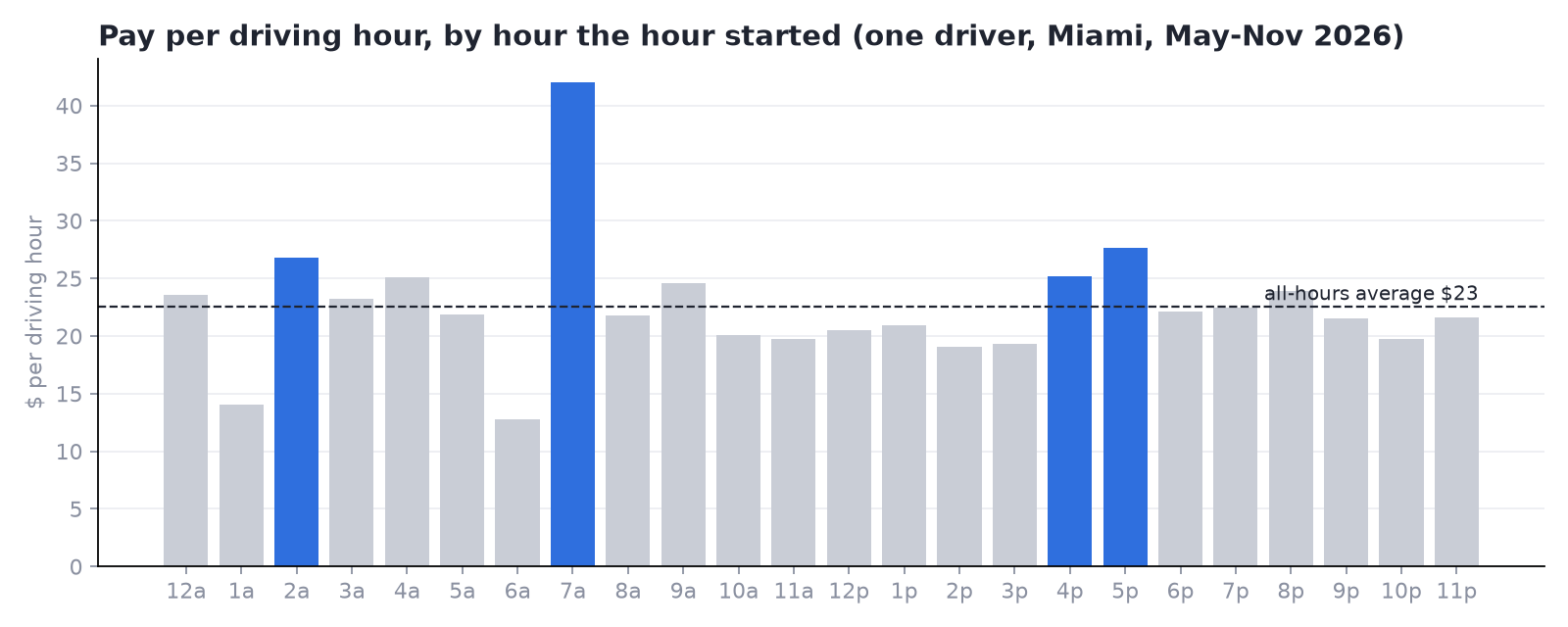
Best hours and days, and how to find yours
Build the shift around your strong windows; use the weak middle of the day for charging and breaks.
The per-minute rule, in fifteen seconds
Need = your cents per minute x (pickup + trip). Raise it for dead-end drop-offs, lower it for short hops.
The $5 floor
Under $5: never. $5-7: only if pickup + trip is 12 minutes or less. $7+: the per-minute rule.
Clock first: never drive for nothing
A trip is never good because it takes you home. Reposition with the app off; it costs no clock.
Reading surge without fooling yourself
Trust a surge only when it is fresh and confirmed in two places. High prices in traffic are not surge.
Scheduled rides: count the lead time
Need = your cents per minute x (30 + pickup + trip). Short local scheduled rides usually fail.
Charging, costs and when to quit
Charge in your weak hours, judge weeks by take-home, and check your pace every 90 minutes.
Built from a logbook, not a highlight reel
Every lesson comes from one driver's records: trips, offer screens and surge checks over six months. Where the data is thin, the course says so. The point is the method, so the workbook shows you how to build the same numbers from your own history.
These are one driver's results, not typical results. Many drivers earn less; your pay depends on your city, car, hours and costs.
Lesson 4: the $5 floor
Small fares feel productive because they chain fast. On two fully reviewed days they paid about half the day's rate per clock minute.